

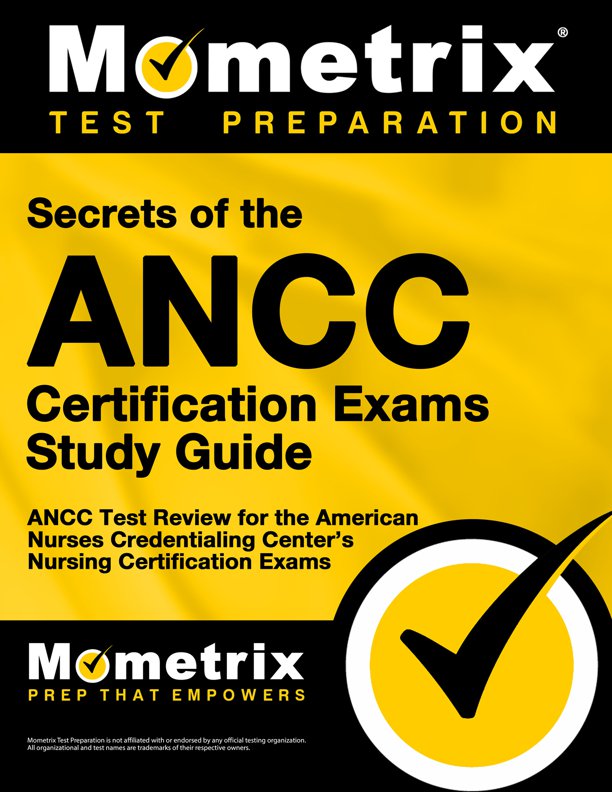
- Includes ANCC Practice Test Questions
- Fast Free Shipping
- Instant eBook Access Available
How to Pass Your ANCC Certification Exam, using our easy step-by-step ANCC Test study guides, without weeks and months of endless studying...
Dear Friend,
On a beautiful late spring afternoon, this past year, a young woman received the devastating news. She had just gotten back her result on the ANCC exam. It was not what she had hoped for. In fact, it was not even close to the expectations she had considering her past experience and educational background.
She had failed.
Then she remembered her friends and felt even worse. She did not look forward to having to tell them the embarrassing news, especially after she had boasted that it was no big deal. She had been procrastinating about taking the exam because she hated standardized tests, and this only confirmed her hatred.
"What will I do now?" she thought with dismay, slowly realizing the harsh reality of her predicament and its upsetting implications on her future.
How to Solve the Problem
Unfortunately, this hypothetical situation occurs all the time. Someone thought they were going to breeze through the examination, told all their friends, made plans for their future, and then got an embarrassing reality check from an ANCC exam.
ANCC certification exams are quite simply an objective assessment of a test taker's requisite foundation of knowledge and skills.
ANCC exam scores are used by the American Nurses Credentialing Center (ANCC) as a uniform standard of qualification. While it may not be fair, all of a person's plans for the future may be dependent upon needing a certain ANCC exam score.
That is the whole purpose of the Secrets of the ANCC Certification Exams study guides: to give test takers the keys to understand how to succeed on the ANCC exams.
Our ANCC Exams Study Guides Are Unlike Any Other
If you'd like to get the ANCC exam score you deserve, to quit worrying about whether your score on the ANCC exam is good enough, and to beat the test taking game so you can become an ANCC board certified nurse, then this might be the most important message you read this year.
Our comprehensive ANCC board certification test study guides are written by our exam experts, who painstakingly researched the topics and the concepts that you need to know to do your best on the ANCC exam. Our original research into the ANCC certification exams, offered by the American Nurses Credentialing Center (ANCC), reveals the specific content areas and the essential skills that are critical for you to know on the ANCC exam. We've taken the information and developed a study guide that is guaranteed to help you be successful on the ANCC exam.
Our study guides cover these ANCC Nurse Practitioner and Clinical Nurse Specialist board certification tests:
- Adult Gerontology Clinical Nurse Specialist Test
- Adult-Gerontology Acute Care Nurse Practitioner Board Certification Test
- Adult-Gerontology Primary Care Nurse Practitioner Board Certification Test
- Family Nurse Practitioner Board Certification Test
- Pediatric Primary Care Nurse Practitioner Board Certification Test
- Psychiatric-Mental Health Nurse Practitioner Board Certification Test
Our study guides cover these ANCC Specialty board certification tests:
- Ambulatory Care Nursing Board Certification Test
- Cardiac Vascular Nurse Board Certification Test
- Case Management Nurse Board Certification Test
- Gerontological Nurse Board Certification Test
- Informatics Nurse Board Certification Test
- Medical-Surgical Nurse Board Certification Test
- Nurse Executive Board Certification Test
- Nursing Professional Development Board Certification Test
- Pain Management Nursing Board Certification Test
- Pediatric Nurse Board Certification Test
- Psychiatric & Mental Health Nurse Board Certification Test
The Exclusive Test Taking Techniques
- Learn why, when, and how to guess to your advantage. Many test takers use exactly the wrong strategy, but you can avoid the pitfalls with the help of our standardized test experts.
- Why answers that sound correct are often the very ones that are wrong and how to tell the difference between the right answer and the many clever-sounding traps set for you by the test writers.
- Our benchmark method for deciding which of the answer choices you should pick.
- What to do about the tough questions that you have no clue how to answer. Don't just give up, use the advice we offer to make sure you give yourself the best chance of getting the right answer.
- Learn how to group your answer choices into families that often narrows down the pool of correct answers. This is a quick way to immediately eliminate one or two of the answer choices and increase your odds of getting the question right.
Before we go any further, let us clarify what Secrets of the ANCC Certification Exams are not. It is not a stale rehash of all of the things you have already learned in the past.
Secrets of the ANCC Certification Exams are our exclusive collection of tips and information specially selected to give you the best results on your ANCC exam for the least time spent studying. It's written in everyday language and is easy to use.
We cover the essential skills necessary to do well on the ANCC exams, plus comprehensive reviews covering all of the essential test sections individually.
Don't take our word for it.
Listen to what our customers say about other Mometrix test preparation products.
"I purchased the study guide, and I just wanted to let you know that I passed my test. I just want to thank you again, and hope you have continued success in your ventures."
Paul L.

"My name is Chris. I used the study guide for five days. The study guide made the test so easy to understand. Like you said this program is worth 100's of dollars. To me 1,000's!! THANKS!"
Chris G.
"I just had to thank you guys for the test prep! I bought the guide as a last minute prep, I mean maybe 5 hours before the test. Like I said, I had ZERO preparation! I was nervous about the test let alone receiving the score I needed. I read the guide through only once before test time and needless to say, the only way I passed was thanks to your refresher!!"
Brian
"Just dropping you a note to let you know that I am completely satisfied with the product. I had already taken the test once and landed in the 75 percentile of those taking it with me. I took the test a second time and used some of your tips and raised my score to the 97 percentile. Thanks for my much improved score."
Denise W.
"I heard about your website from a friend. I am enrolled in a review course, and in hindsight, I wish I wouldn't have taken my review course and instead spent a fraction of the money on your program. Thank you!"
Zac L.
You get at least 10 times your money's worth!
When you consider what's at stake with the exam, we believe the value of our study guide gives you at least ten times your money's worth.
In summary, here's what you get:
When you buy Secrets of the ANCC Certification Exams, it includes:
The 5 Secret Keys to ANCC Exam Success
- Plan Big, Study Small
- Make Your Studying Count
- Practice the Right Way
- Pace Yourself
- Have a Plan for Guessing
The Comprehensive General Strategy Review
- Read Carefully
- Contextual Clues
- Prefixes
- Hedge Words
- Switchback Words
- Face Value
- Answer Selection
- Eliminate Answers
- Avoid Fact Traps
- Extreme Statements
- Benchmark
- Predict the Answer
- Tough Questions
- Check Your Work
- Pace Yourself
- Don’t Rush
- Keep Moving
Click below to see just a small sampling of the topics covered by our study guides:
Nurse Practitioners and Clinical Nurse Specialists
Adult-Gerontology CNS Exam Topics
- Direct Care
- Changes that occur with aging
- Elder abuse
- Environmental assessment
- Asthma
- Electrolyte imbalance
- Pressure ulcers
- Pharmacokinetics
- Patients
- Professional Practice
- Intra- and interdisciplinary teams
- Preceptorship
- Scope and standards of advance practice
- Documentation
- Boundary issues
- Social media
- Systems Leadership/Quality/Outcomes
- Types of budgets
- Organization accreditation standards
- Change theory/management
- Quality improvement
- Sampling
- Media record review
Adult-Gerontology Acute Care Nurse Practitioner Exam Topics
- Foundations of Practice
- Patient history
- Nosocomial infection
- Bipolar disorder
- Sedation
- Professional Role
- Advanced practice registered nursing
- Medicare
- Supporting families of dying patients
- Research
- Independent Practice
- Myocardial infarction
- Lumbar puncture
- Occupational therapy
- Transitional care planning and discharge care planning
- Outcomes evaluation and evidence-based practice
- Healthcare Systems
- Delivery of care
- Continuum of care
- Outcomes management
Adult-Gerontology Primary Care Nurse Practitioner Exam Topics
- Foundations of Advanced Practice Nursing
- Diabetes mellitus
- Brain tumors
- Hypothyroidism
- Medication for an elderly patient
- Breast cancer and endometriosis
- Psychoactive substance abuse
- Health assessment
- Professional Roles
- Developing a clinical study
- Coping with stress
- HIPAA
- Medicaid
- Person-centered care
- Independent Practice
- Therapeutic communication
- Prevention plans for these immunizations
- Elderly check-up
- Thalassemia and macrocytic anemias
- Population that gets depression
- Syphilis
- Polycystic ovarian syndrome
Family Nurse Practitioner Exam Topics
- Patient Advocacy
- Glycemic Control
- Neuropathic Complications of Diabetes
- American Heart Association
- Pharmacodynamics
- Anaphylaxis Syndrome
- Nicotine Patch
- Hepatic Cirrhosis
- Nicotine Nasal Spray
- Leukotriene Inhibitors
- Toxicity of Digitalis
- Vasodilators
- Centers for Disease Control
- Anti-Lipids
- Histamine Receptor Antagonists
- Acetylsalicylic Acid
- Anticonvulsants
- Microwave Diathermy
- Autism Spectrum Disorders
- Glasgow Coma Scale
- Malpractice
- Collaboration
- Risk Management
- Therapeutic Communication
- Bloom's Taxonomy
- Labyrinthitis
- Ménière's Disease
- Pharmacokinetics
- Temporomandibular Disorder
- Chronic Bronchitis
- Emphysema
- Pleural Effusion
- Edema
- Coronary Artery Syndromes
- Hodgkin's Disease
- Appendicitis
- Abruptio Placentae
- Bartholin Cyst
- Hemophilia
- Hyperthyroidism
- Continuous Quality Improvement
- The Shewhart Cycle
- Fetal Alcohol Syndrome
- Encopresis
- Bristol Stool Form
- Braden Scale
- Genetics
Pediatric Primary Care Nurse Practitioner Exam Topics
- Youth Risk Surveillance System (YRSS)
- Autism Spectrum Disorders
- Mental Health Problems
- Diabetes Mellitus in Children
- Vaccines
- Nutrition
- Health Behavior Guidelines
- Growth and Development
- Screening Procedures
- Acute Epiglottitis
- Acute Tracheitis
- Streptococcus Pneumoniae
- Apnea of Prematurity (AOP)
- Pneumothorax
- Asthmaticus
- Methicillin-resistant Staphylococcus Aureus
- Retinopathy of Prematurity
- Strabismus
- Nystagmus and Blepharoptosis
- Otitis Media and Otitis Externa
- Recurrent Epistaxis
- Hypertrophic Pyloric Stenosis
- Malrotation and Yolvulus
- Necrotizing Enterocolitis
- Hernia
- Encopresis
- Giardia lamblia
- Intestinal Parasites
- Crohn's Disease
- Peptic Ulcer Disease (PUD)
- Acute Abdominal Trauma
- Congestive Heart Failure
- Hypertrophic Cardiomyopathy
- Atrial Septal Defect (ASD)
- Patent Ductus Arteriosus
- Tetralogy of Fallot
- Hypoplastic Left Heart Syndrome
- Cardioverter Defibrillator (ICD)
- Mitral Stenosis
- Renal Pelvis and Glomerulus
- Epispadias
- Ureteropelvic Junction Obstruction
- Persistent Cloaca
- Hemodialysis
- Spinal Cord Injury
- Myelomeningocele
- Head trauma
- Infectious Encephalopathy
- Seizures
- Legg-Calvé-Perthes Disease
- Pseudohypertrophic (Duchenne)
- Candidiasis
- Burn Injuries
- Necrotizing fascitis
- Hypothyroidism
- Adrenocortical Insufficiency
- Pheochromocytoma
- Cultural Diversity
- Therapeutic Communication
- Anticipatory Guidance
- Professional Role and Policy
- Confidentiality
- Genetic Testing
- Malpractice
- Intra- and Interdisciplinary Education
- Research
- Optimal outcomes
- Continuous Quality Improvement
- Shewhart Cycle
Psychiatric-Mental Health Nurse Practitioner Exam Topics
- Mood Disorders
- Psychotic Disorders
- Anxiety Disorders
- Sleep Disorders
- Tardive Dyskinesia
- Chronic Pain
- Mental Illness
- Depression
- Malnutrition
- Physical Abuse
- Suicide Risk Assessment
- Domestic Violence
- Family Violence Prevention Fund
- Elder Abuse
- Bereavement
- Substance Abuse
- Peck's Theory of Adult Development
- Erikson's Theory of Psychological Development
- Resiliency Theory
- Maslow's Hierarchy of Needs
- Jung's Theory of Individualism
- Confusion Assessment Method
- Geriatric Depression Scale
- Trail Making Test
- Digit Repetition Test
- Drug Screening
- Beck Depression Inventory
- Meningococcal Vaccine
Specialties
Ambulatory Care Nurse Exam Topics
- Ambulatory Care Nursing
- Health Screening
- Domestic Abuse
- Anorexia Nervosa
- Pediatric Issues
- Asthma
- Sickle Cell Disease
- Attention Deficit Hyperactivity
- Benign Prostatic Hyperplasia
- Prostate Cancer
- Testicular Cancer
- Hypertension
- Chronic Diabetic
- Congestive Heart Failure
- Oncology
- Addison's Disease
- Bulimia Nervosa
- Alopecia
- Alzheimer's Disease
- Anticoagulant Therapy
- Cardiac Arrhythmia
- Oral Contraceptive Pills
- Telehealth Nursing
- Managed Care Plans
- Coding
- Diverticulosis
- Tonsillectomy
- Theory of Reasoned Actions
- Social Cognitive Theory
- Anticoagulation Therapy
- Acne Vulgaris
- Home Environment
- Nursing Home
- Adenoidectomy
- Good Nutrition
- Health Promotion
- Self-Care
- Occupational Stressors
- Screening and Assessing
- Health Education
- Occupational Safety and Health Legislation
- Tertiary Health Prevention
- Community Health
- Educational Programs
- Social Cognitive Theory
- Theory of Reasoned Actions
- Environmental Safety
- Abandonment
- Telephone Triage
Cardiac Vascular Nurse Exam Topics
- Aneurysms
- Atherosclerosis
- Unstable Plaques
- Pharmaceutical Approaches
- Buerger's Disease
- Raynaud's Phenomenon
- Cardiomyopathy
- Congestive Heart Failure
- Pathophysiology
- Cor Pulmonale
- Gestational Diabetes
- Metabolic Syndrome
- WHO Guideline
- Endothelial Dysfunction
- Dyslipidemia
- Low-Density Lipoprotein (LDL)
- Cholesterol Levels
- Myocardial Infarction
- Hemorrhagic Stroke
- Atrial Flutter
- Wolff-Parkinson-White Syndrome
- Beta-Adrenergic Antagonists
- Sympathomimetic Agents
- Ionotropic Group of Drugs
- Cardiac Glycosides
- Phosphodiesterase Inhibitors
- Anti-Dysrhythmic
- Nitrates/Nitrites
- Anti-Hypertensive Vasodilators
- Calcium Channel Blockers
- Anticoagulants
- Anti-Thrombotic
- Renin-Angiotensin System
- Thiazide Diuretics
- Loop Diuretics
- Motivation
- Cardiac Transplantation
- Patient Education
- Functions of Coping
- Maladaptive Responses
- General Adaptation Syndrome
- Psychologic Responses
- Self-Monitoring Techniques
- Team-Building Models
- Patients' Rights
- Code of Ethics
- Clinical Practitioners
- Outcome Evaluation
- Leadership Styles
Case Management Nurse Exam Topics
- Case Management Plan
- Clinical Practice
- Practice Guidelines
- Algorithms
- Myocardial Infarction
- Intravenous Therapy
- Psychosocial Assessment
- Outcome Indicators
- Discharge Planning
- Cultural Differences
- Cultural Competency
- Advanced Directives
- Transitional Care Planning
- Life Care Planner
- Disease Management Program
- Predictive Modeling
- Premature Infant
- Geriatric Case Management
- Five D's of Depression
- Behavioral Illnesses
- Case Management Information Systems
- Data Warehouse
- Asthma
- Emergency Assistance
- Vocational Education
- Subacute Setting
- Pharmaceuticals
- Disposable Medical Supplies
- Durable Medical Equipment
- Retrospective Review
- Term Preauthorization
- Private Payers Groups
- Government Reimbursement Methods
- Disability Insurance Plans
- Diagnostic Related Groups
- Benchmarking
- The Joint Commission
- HEDIS
- HIPAA
- Ethical Concerns
- Standards of Care
- Certification Exam
- Milliman Care Guidelines
- Utilization Management Organizations
- Admission Certification
- Satisfaction Survey
- Data Collection Tool
- Diabetic Patient
- Measurement Criteria
- Documentation
Gerontological Nurse Exam Topics
- Biological Theories of Aging
- Havighurst's Theory
- Hypertension
- Cognitive Changes
- Loop Diuretics
- Thiazide Diuretics
- Systolic Heart Failure
- Myocardial Infarction
- Vasodilators
- Aldosterone Agonist
- Venous Insufficiency
- Atrial Dysrhythmias
- Chronic Bronchitis
- Malnutrition
- Fluid Balance
- Hyposalivation
- Dysphagia
- Acute Gastrointestinal Hemorrhage
- Hepatic Cirrhosis
- Benign Prostatic Hypertrophy
- Urinary Tract Infections
- Pyelonephritis
- Chronic Renal Failure
- Osteoporosis
- Rheumatoid Arthritis
- Cardiac Dysrhythmias
- Musculoskeletal Deformities
- Hyperglycemia
- Ketoacidosis
- Thermoregulation
- Thyrotoxic Storm
- Electrolyte Imbalances
- Respiratory Acidosis
- Jung Theory of Individualism
- Post-Menopausal Changes
- Sociological Theories of Aging
- Arterial Blood Gases
- Immunosuppression
- Alzheimer's Disease
- Sleep Disorders
- Ischemic Stroke
- Chronic Obstructive Lung Disease
- Hemorrhagic Stroke
- Parkinson's Disease
- Chronic Grief
- Atrioventricular Block
- Schizophrenia
- Anxiety Disorders
- Residential Care Facilities
- Home Meal Delivery Programs
- Aggregate Data
- Binary Code
- Hexadecimal Coding System
- Data Analysis
- Median
- Range
- Variance
- Chi-Square Test
- Regression Analysis
- Balanced Scorecard
- Line Graphs
- Bar Graphs
- Pie Charts
- Scattergram
- Dashboard
- External Benchmarking
- Internal Trending
- Evidence-Based Practice
- Strategies
- Martha E. Rogers
- Hildegard Peplau
- Dorothea Orem
- Betty Neuman
- Florence Nightingale
- Ida Jean Orlando
- Crisis Theory
- Lee Ann Hoff
- Madeline Leininger
- Information Theory
- Theory of Cognitive Development
- Psychosocial Development Model
- Systems Theory
- Theory of Adult Development
- End-User Acceptance
- Patient Advocacy
- Malpractice
- Liability
- Health Care Reform
- Institute Of Medicine
- Virtual Reality
- Problem-Based Learning
- Radio-Frequency Identification
- Voice-Over Internet Protocol
- Bluetooth Technology
- Wikis
- Webex
- Boolean Logic
- Barcode Medication Administration
- Biomedical Device Interfaces
- Interoperability
Medical-Surgical Nurse Exam Topics
- Piaget's Theory
- Psychosocial Aspects Of Aging
- Patient's Experience Of Aphonia
- Alaryngeal Communication
- Laryngectomy
- Tracheoesophageal Puncture
- Cognitive Disabilities
- Ventilator
- Parkinson's Disease
- Homeostasis
- Osmosis
- Hypotonic, And Hypertonic
- Respiratory Acidosis And Alkalosis
- Hypercalcemia
- Multiple Organ Dysfunction Syndrome
- Herbal-Drug Contraindications
- Food Guide "Mypyramid"
- Parenteral Feeding
- Developmental Tasks
- Biological Theories Of Aging
- Selye's Theory Of Adaptation
- Posttraumatic Stress Disorder
- Maslow's "Hierarchy Of Needs"
- Psychosocial Assessment
- End-Of-Life Care
- Palliative/Hospice Care
- Common Sexual Dysfunctions
- Nursing Interventions For Elderly
- Domestic Violence
- Medication Regimen
- Teaching Techniques
- Diagnosis-Related Groups
- Interdisciplinary Collaboration
- Community-Based Nursing
- Five Stages Of Grief
- Erik Erickson
- Occupational Nursing
- Analgesics For Pain Control
- Nonsteroidal Anti-Inflammatory Drugs
- Chinese Medicine
- Homeopathic Medicines
- Ayurveda
- Biofeedback
- Music And Dance Therapy
- Metabolic Assessment
- Gallbladder And Pancreatic Disease
- Continuous Quality Improvement
- Root Cause Analysis
- Nursing Malpractice
- Organizational Models
- Continuum-Based Leadership Model
- Goals Based and Process Based Evaluations
- Benchmarking
- Continuous Quality Control
- Clinical Trials
- Various Models for Nursing Research
- Ten Steps in Community Assessment
- Feasibility Studies
- Centralized Organizational Structure
- Product Line Management
- Community Alternative Care Settings
- Clinical Ladder of Advancement
- Nurse's Role in Work Redesign
- Importance of Collaborative Practice
- Corporate Culture and Climate
- Health Care Delivery Systems
- Strategic Planning
- Crisis Management
- Setting Goals
- Steps in Contingency Planning
- Shared Governance Model
- Calculating Profit
- Scenario Analysis
- Marketing in Health Care
- Image Building
- Case Management
- Staff Management Systems
- Benefits of Resource Management
- Medicare and Medicaid Systems
- Health Management Organizations
- Budgeting
- Management of Objectives
- Various Rating Scales
- Peer Review
- Motivators
- Persuasion and Negotiation
- Conflict Resolution
- Theories of Job Satisfaction
- Steps to Group Formation
- Management Styles
- Team Building
- Methods of Scheduling
- Methods of Recruitment
- Ethics of Pain Management
- Code of Ethics for Nurses
- Four Conservation Principles
- Nuremburg Code of Ethics
- Fair Labor Acts
- Contract Administration
- Three Main Ideas Used in the Creation of Contracts
- Liability Issues of Tele-nursing
- Steps in Forming Networks
Nursing Professional Development Exam Topics
- Bioethics
- Nursing Code of Ethics
- Deontology
- Nurse Practice Act
- Principles of Law
- Liability
- Collective Bargaining
- Good Samaritan Acts
- Malpractice
- Nurse Practitioner
- Adult Learning Theory
- Self-Directed Learning
- Competency
- American Nurses Association
- Facilitator
- Consultant
- Cyberology
- Change Theory
- Gordon Lippitt
- Kurt Lewin
- Superuser
- E-Learning
- Delphi Technique
- Psychomotor Domain Theory
- Humanism and Cognitivism
- Competency-Based Education
- Employee Orientation Program
- Evaluation
- Competency Validator
- Consortium
- Merger
- Accreditation
- Benchmarking
- HIPAA
- National League of Nursing
- Learning Management Systems
- Marketing
- Co-Providership
- Nurse Licensure Compact
- Collaboration
- Qualitative Research
- Cosmograph
- Cause-and-Effect Diagram
- Career Ladder
- Facilitation
- Positivism
- Conflict Management Strategy
- Med-ARB
- Work Breakdown Structure
Pain Management Nursing Exam Topics
- Transient (Acute) Pain
- Pharmacokinetics
- Transduction
- Neuropathic Pain
- Tricyclic Antidepressants
- Complex Regional Pain Syndrome
- Raynaud Phenomenon
- Temporomandibular Joint Disorder
- Adult Sickle Cell Disease
- Pseudoaddiction
- Physical Dependence
- Topical Analgesic Agents
- Numeric Rating Scale
- Nociceptive Pain
- Somatic Pain
- Visual Analogue Scale
- McGill Pain Questionnaire
- Brief Pain Inventory
- Chronic Nonmalignant Pain
- Preoperational Developmental Stage
- Functional Capacity Assessment
- Quality Of Life
- Pediatric Chronic Pain Patients
- Mobility Assistive Devices
- Dartmouth Questionnaire
- Minnesota Multiphasic Personality Inventory
- State-Trait Anxiety Inventory
- Depressivity Scale
- UAB Pain Behavior Scale
- Pain Assessment
- Barker & Whitfield's CAGE Questions
- Coping Strategies Questionnaire
- Vanderbilt Pain Management Inventory
- Survey Of Pain Attitudes
- Transtheoretical Model
- Interdependence
- Pharmacological Interventions
- Transdermal
- Selective Serotonin Reuptake Inhibitors
- Patient Controlled Analgesia
- Pain Therapy Exercise Program
- Non-Pharmacological Interventions
- Spinal Cord Stimulator
- Cognitive-Behavioral Therapy
- Herbal Medicine
- Homeopathy
- Magnetotherapy
- Chiropractic Therapy
- Opioid-Induced Nausea
- Precocious Puberty
- Fifth Disease
- Cyanosis
- Dextrocardia
- Varicella Vaccine
- Gavage
- Scoliosis
- Hemophilia
- Psychological Abuse
- Koplik's Spots
- Nature vs. Nurture
- Infusion Pump
- Hypocalcemia
- Sepsis
- Lymphomas
- Wilm's Tumor
- Human Development
- Aortic Stenosis
- Temperament
- Acute Otitis Media
- Febrile Seizures
- Inguinal Hernia
- Jaundice
- Nasogastric Tube
- Babinski Reflex
- Universality vs. Context Specificity
- Anxiety Disorders
- Colic
- Structural-Functional Theory
- Initiative vs. Guilt stage
- Subdural Hematoma
- Cradle-Hold
- Hemorrhagic Disease
- Startle Reflex
- Brushfield's Spots
- Erikson's Theory
- Normal Growth Patterns
- Illness and Hospitalization
- Teaching Strategies
- Suicide in Children
- Venipuncture
- Sickle Cell Disease
- Tetralogy of Fallot
- Enuresis
- Neural Tube Defects
- Meconium
- SIDS
- Cytomegalovirus
- Oxygen Therapy
- Adolescent Stage
- Family Stress Theory
Psychiatric & Mental Health Nurse Exam Topics
- Learning Disorders in Children
- Adolescent Mood Disorders
- Psychological Theories on Aging
- Therapeutic Communication
- Group Development
- Therapeutic Milieu
- Restrictive Measures
- Evaluating Patient Outcomes
- Mental Status Examination
- Patient Assessment Techniques
- Behavioral Predictors
- Beck Depression Inventory
- Nursing Process
- Crisis Intervention
- Psychopharmacology
- Phases of Drug Therapy
- Antipsychotic Medications
- Lithium Toxicity
- Continuum of Care
- Pain Control
- ECT
- Depressive Disorders
- Bipolar Disorder
- Levels of Anxiety
- Panic Disorders
- Obsessive-Compulsive Disorder
- Though Process Descriptors
- Anorexia and Bulimia Nervosa
- Alzheimers and Dementia
- Alcohol and Substance Abuse
- Functional Families
- Effects of Mental Illness
- Family Life Cycle
- Physical Assessment Components
- Styles of Learning
- Risk Management
- Resource Utilization
- Clinical Supervision
- Preparing Presentations
- Advanced Nursing Practice
- Limitations of Practice Guidelines
- Evidence Based Practices
- Healthy People 2010
- Violent Families
- Behavior Modification
- Suicide Risk Assessment
- Mini-Mental Health Exam
- Physiologic Response to Anxiety
- Objective Information
plus all of the other special tips and secrets we have included to help you prepare for the exam.
Receive the Following Bonuses
Since we know it's 100% to your benefit to use our study guide, we want to further encourage you by also including the following with your order:
- Bonus One: ANCC Exam Practice Test Questions
Think you're ready for the ANCC test? Test yourself using our practice test questions. Find out if you're prepared or if you need to head back to the study guide for another review. Use our practice test questions to make sure that you're not caught off guard on the day of the test!
Detailed answer explanations are included for the questions. It may sound obvious, but you have to know which questions you missed (and more importantly why you missed the question) to be able to avoid making the same mistakes again when you take the real test. That's why the practice test questions we include for the ANCC test include answer keys with detailed answer explanations to each question. The in-depth answer explanations will allow you to better understand the questions that were difficult for you or that you needed more help to understand.
- Bonus Two: Study Skills
The way to get the test score that you deserve is by proper preparation. The best preparation includes both knowing what to study and how to study. Our Secrets of the ANCC Certification Exams study guides will teach you what you need to know, but our Study Skills bonus will show you HOW to use the information to be successful on the ANCC Exam. The ability to learn faster will accelerate the progress you make as you study for the test.
- Bonus Three: How to Overcome Test Anxiety
Do you get really nervous the day before important tests? If so, you could be suffering from a mild form of what's known as test anxiety. The report we include gives you some of the latest important research into test anxiety, including our exclusive tips on how to make the test-taking experience as stress-free as possible while maximizing the score potential you have.
By the way, the bonuses are yours to keep even in the unlikely event you decide to take advantage of our ironclad money-back guarantee:
You can't lose with our 100%,
ironclad, moneyback guarantee
Order Secrets of the ANCC Certification Exams entirely at our risk. When you order from this site, it comes with a risk-free, 1-year 100% money-back guarantee. There's NO RISK on your part.
If you don't like this comprehensive book for ANY reason, you can return it for a 100% refund of the product price. You're free to return it at any time, for any reason, up to one year after the purchase date, no hassle, no questions asked.
Don't decide now if the product is for you. Just get it and try it out. If it doesn't do everything we say and more, if you don't save time, money, and frustration, if it isn't what you thought it was, if it doesn't work for you, you have nothing to worry about when you order from this site because you can get every dime of your money back under the no-loopholes guarantee. There's nothing to lose and everything to gain.
Get the Secrets of the ANCC Certification Exams Study Guide
Here's how to order right now!
A printed copy will typically ship within one business day from our shipping facility. Or, if you prefer, you can order the study guide as an online ebook. It doesn't require any special software. If you can read this web page, you have all you need to start using and applying Secrets of the ANCC Certification Exams in just five minutes. You don't have to wait for anything to come in the mail. Get Secrets of the ANCC Certification Exams immediately!
Both versions contain the same information. If you need instant access and can view the book online, order the ebook. If you would prefer the physical book and can wait for the product to arrive in the mail, order the printed book.
It's easy to order your copy of Secrets of the ANCC Certification Exams. These comprehensive packages retail for $63.99 or more, but are available to you today starting at the incredibly low price of $34.99 for our instant access ebook or $39.99 for our printed book. Just click one of the links below.

If you have any problems or questions, please send an email to support@mometrix.com and we will be sure to get it working for you.
By Jay Willis
This Page Last Updated: 04/03/2024